Thirty swarm points, one narrow opening, and a controller rewritten by a language model. The score combines five deterministic layouts — 150 swarm points in total.
Prediction logs did not transfer cleanly across models. A simple incumbent rule stopped good controllers from being overwritten. Combined runs reached 150, 147, and 150 arrivals.
The game#
The task had to be easy to watch and hard enough to resist a one-line solution. Thirty simulated swarm points start on the left of an arena. To finish, they must find a one-metre opening, pass through it, and remain in the goal zone on the far side.
A language model may rewrite one Rust controller function. It sees the same local view as every swarm point: nearby neighbours, nearby walls, its own velocity, and a compass pointing straight at the goal. After each attempt it receives the judge's numbers and may try again, up to forty times.
The physics, layouts, and judge stay fixed. Only the controller changes.
A small bet#
The first comparison was deliberately modest. In one version the model simply saw the recent results and continued. In the other it had to leave a short prediction log before every change: what mechanism it thought was producing the current behaviour, what it would change, and what numbers it expected next.
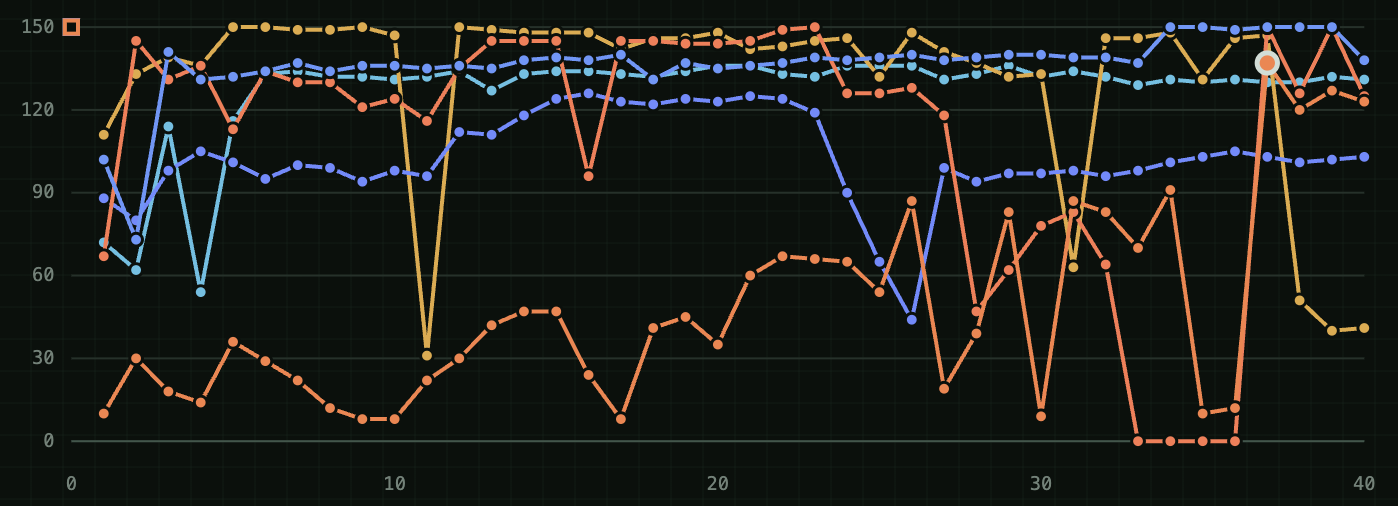
Across three fresh MiniMax M3 repetitions, the prediction runs finished ahead in two of three and lost less from their best score in all three. It was a signal, not a clean victory.
The comparison was repeated with DeepSeek V4 Pro, GPT-5.6 Terra, and Claude Sonnet 5. The pattern did not transfer neatly. Terra was already strong without the prediction log. DeepSeek produced opposite outcomes in two repetitions. The Sonnet prediction run retained its peak. The effect was not universal.
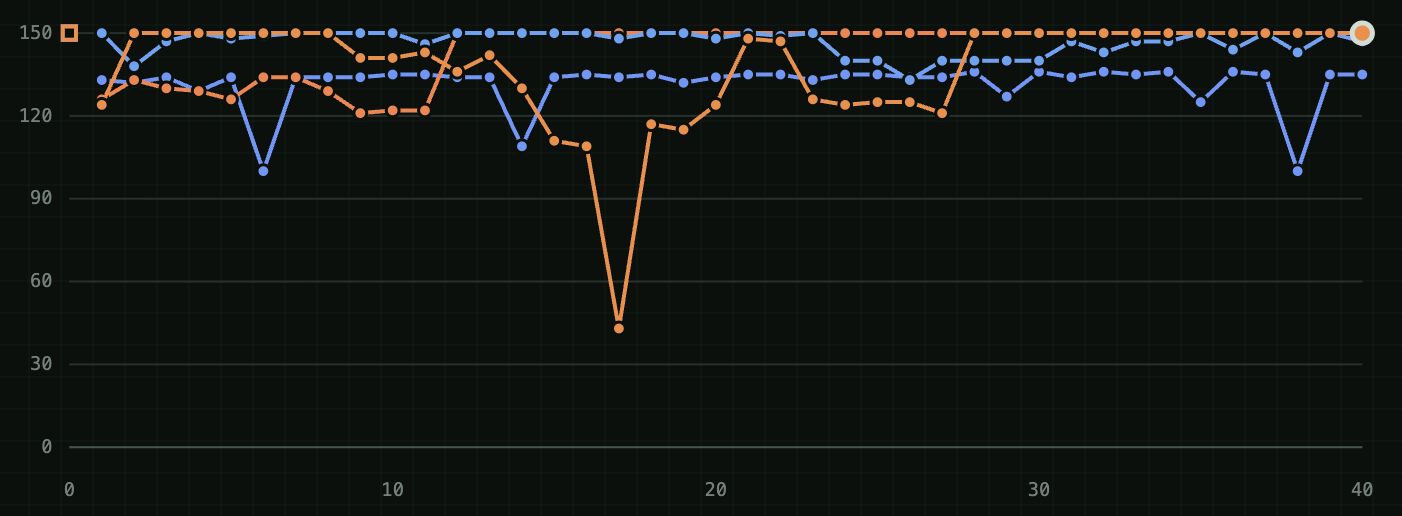
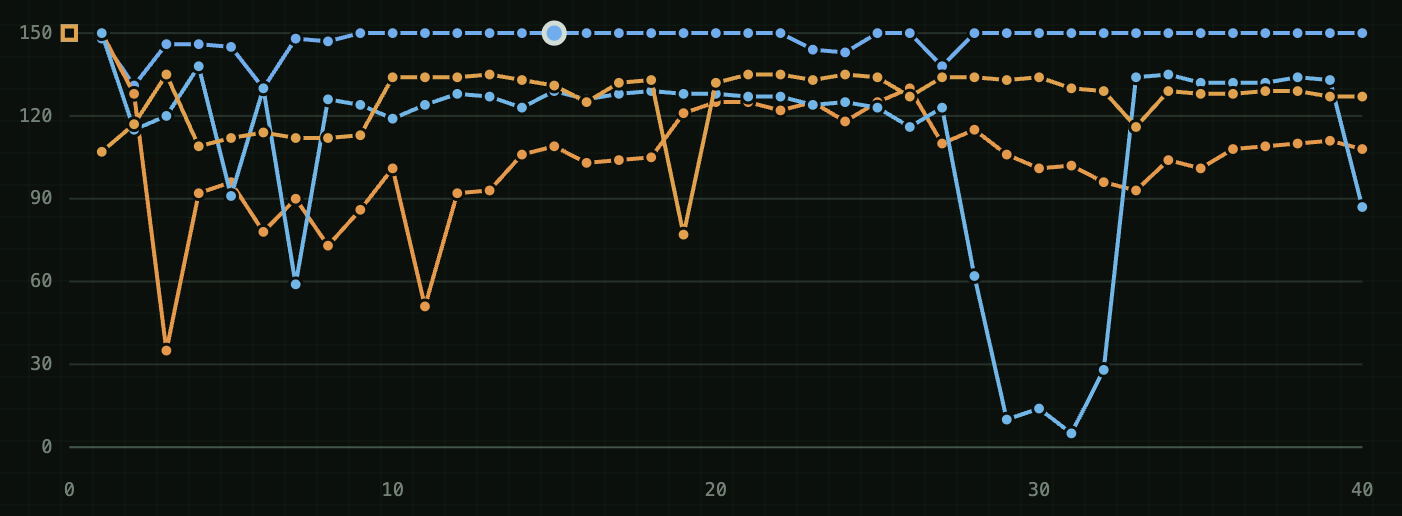
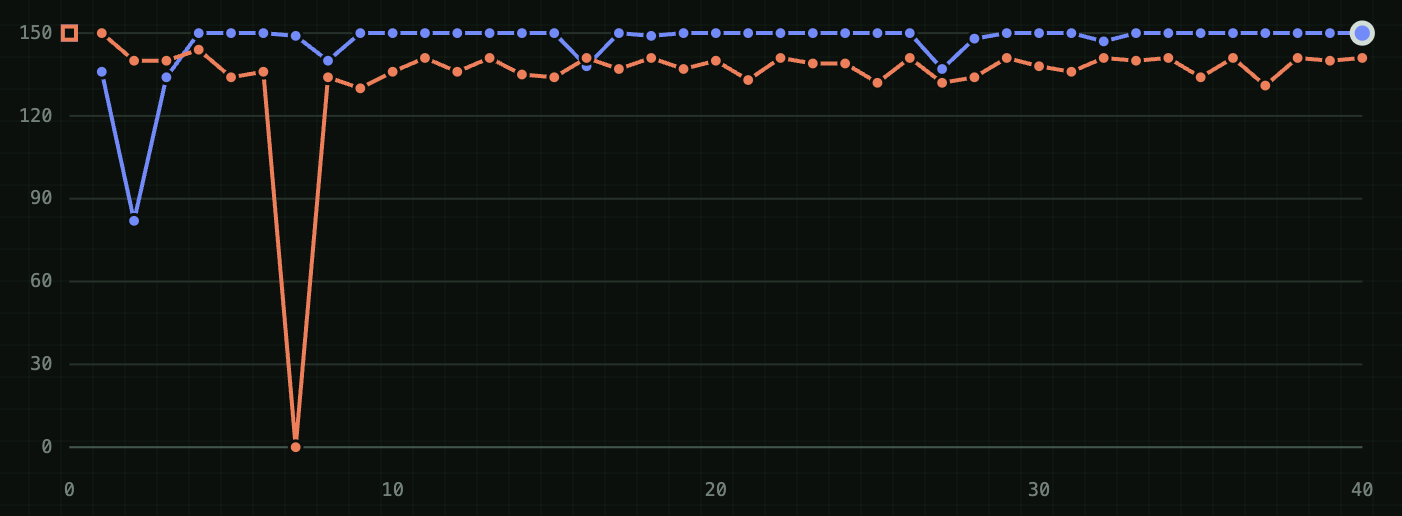
The same comparison did not travel cleanly across models.
A simpler explanation#
The question echoed an earlier result on retention in working knowledge. A promising line of thought and a promising controller can fail in the same way. Not by being disproved, but by being replaced.
This suggested a simpler counterpoint to prediction. Keep an incumbent. Let alternatives challenge it, but make replacement earn its place.
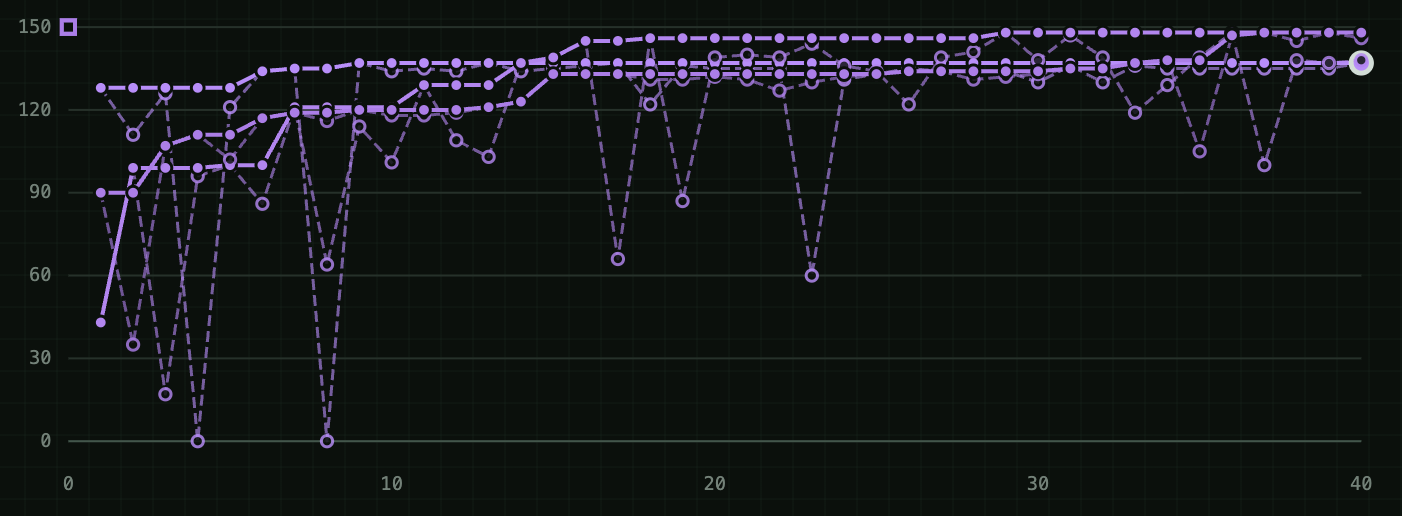
On its own, the incumbent changed the shape of the runs. Good solutions stopped disappearing. What remained was more interesting: would prediction still matter once retention was no longer the problem?
Together#
Finally, the two were combined: the model kept its prediction log, and the incumbent rule kept the best controller. This was the strongest group in the set.
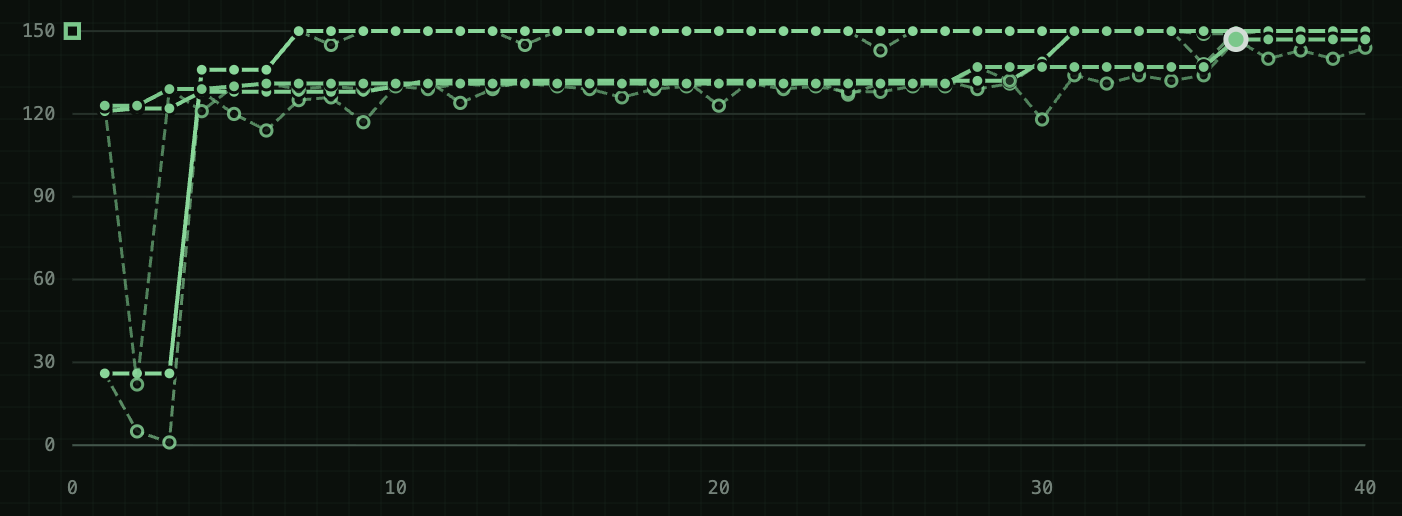
Prediction + incumbent finished at 150, 147, and 150 arrivals. Two trajectories reached the ceiling. The third missed three swarm points.
| run | arrived | collisions | time |
|---|---|---|---|
| 35f199 | 150 | 1293 | 8.02 s |
| 9ea9a8 | 147 | 1133 | 15.39 s |
| 319c85 | 150 | 810 | 10.30 s |
At a glance#
The four MiniMax M3 conditions are easiest to compare by where the runs ended and how much of their best score they lost.
| condition | runs | final arrivals | lost from peak |
|---|---|---|---|
| plain | 3 | 123 (41–126) | 24 (11–109) |
| prediction | 3 | 131 (103–138) | 12 (5–23) |
| incumbent | 3 | 148 (137–148) | 0 |
| prediction + incumbent | 3 | 150 (147–150) | 0 |
Final arrivals and loss from peak are medians, with observed ranges in parentheses. Each run had a ceiling of 150 arrivals.
What held#
The strongest runs were not defined by a single clever move. What seemed to matter was a little structure around revision: a way to look ahead, and a way to keep the ground already won.
That is not a general law. It is a small distinction from one deliberately narrow testbed. But it held long enough to become worth carrying into the next experiment.